
Park County Projected vs Actual
A projected release date is a best available date based on sentence, jail time already served, earned time, parole eligibility, board action, and agency calculation. An actual release date is the custody event after release has happened. Park County searches must separate those two concepts because a live prediction can move, while a release record is a past official action.
A person in Park County Jail before trial usually does not have a single computed release date. Release may depend on a bond order, the posting of bond, court paperwork, electronic-monitoring setup, a hold from another agency, or dismissal or sentence terms. A person sentenced to CDOC has a different path. The CDOC offender search can be reviewed for a DOC number, facility or custody status, parole eligibility, projected or mandatory release, discharge, and supervision indicators when those fields are available.
Scheduled vs actual release. A projected date is not a promise that release will occur on that day. Holds, board decisions, discipline, recalculation, or court orders can change it.
Find a Park County Release Date
The correct lookup starts with the type of custody. Park County Jail, CDOC, BOP, ICE, and Park Combined Court each answer a different release-date question. The Park County released inmate search should be used to decide which system controls the custody event before treating any date as final.
- For a current Park County Jail detainee, call Park County Jail or use VINE for covered Park County charges.
- For a bond release, check the court docket and the bond order, then account for required processing and any electronic-monitoring hold.
- For a state-prison sentence, search the CDOC Offender Search by DOC number, last name, first name, or gender.
- For CDOC name searches, use the CDOC Search Tips because names may be prosecuted names and DOC numbers are the primary identifier.
- For a probation sentence or court disposition, use the Park Combined Court docket or request court records.
- For a federal sentence, use the BOP locator and BOP record explanation because federal date rules are separate from Colorado rules.
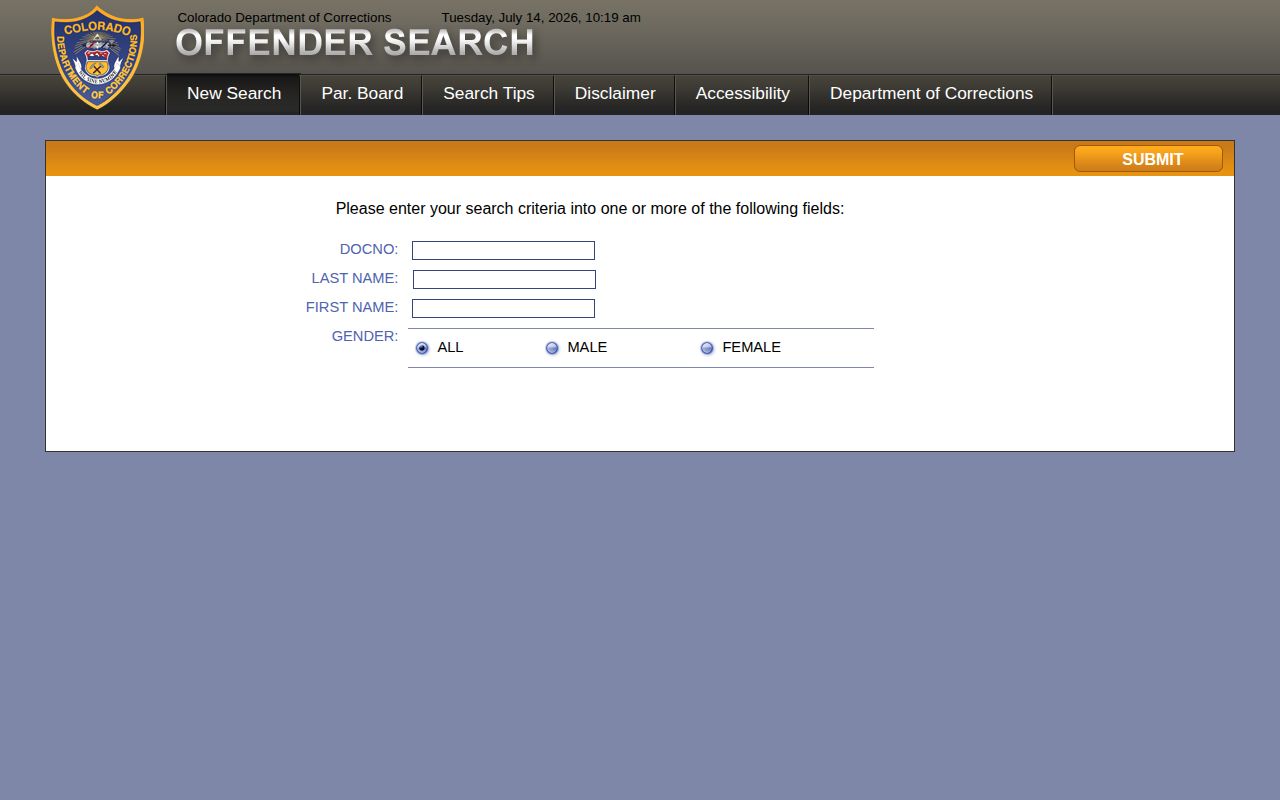
The CDOC search page is the public starting point for a sentenced Colorado state-prison inmate.
For a county-jail-only case, do not force the CDOC path unless the person was sentenced or transferred to state custody.
CDOC Fields for Park County
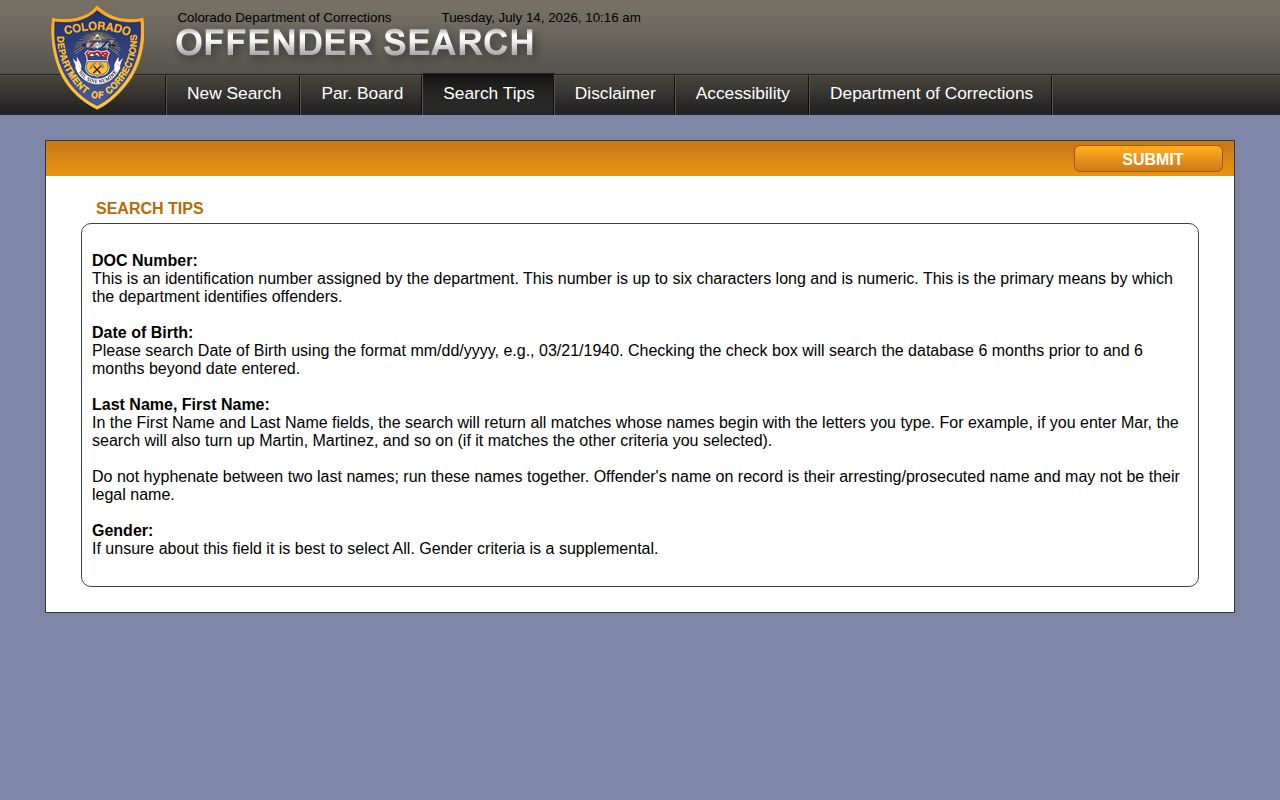
CDOC search fields are DOCNO, last name, first name, and gender. The DOC number is numeric, up to six characters, and is the main CDOC identifier. Name searches return matches beginning with the typed letters. Search tips warn that the name on record may be the arresting or prosecuted name rather than the legal name, and gender is supplemental.
| CDOC field | How to use it | Release-date value |
|---|---|---|
| DOCNO | Enter the numeric CDOC number when known | Most reliable way to reach the correct state-prison profile |
| Last name | Use the start of the last name and avoid hyphenating two last names | Can find a profile when the DOC number is unknown |
| First name | Use with last name when common names create many matches | Helps narrow profile matches |
| Gender | Select only when known or leave broad | Supplemental filter, not a release-date field |
The CDOC Search Tips page documents these rules.
After the correct profile is found, review date fields and status fields together rather than reading one date in isolation.
Colorado Earned Time Rules
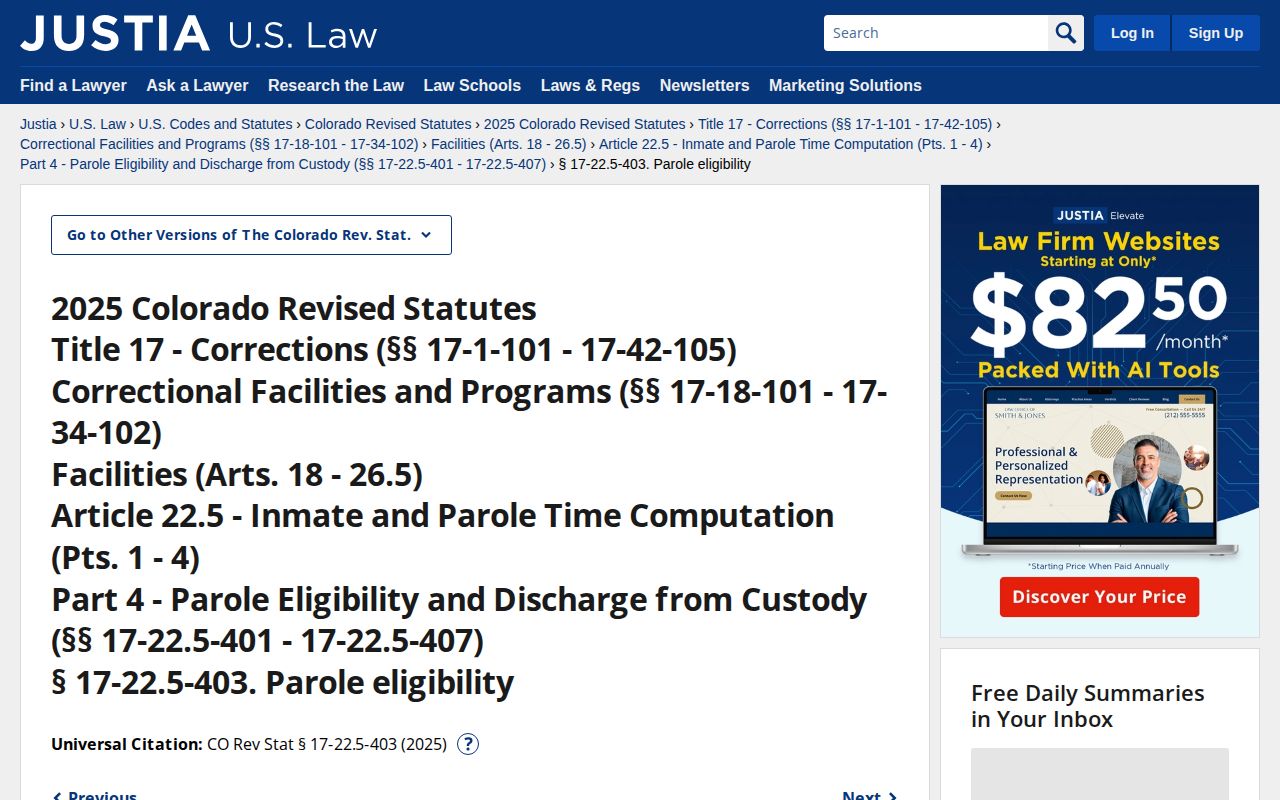
Colorado release-date computation is not a simple one-size rule. C.R.S. § 17-22.5-403 generally makes many felony offenders eligible for parole after serving 50 percent of the sentence imposed, less earned time under C.R.S. § 17-22.5-405. The same parole-eligibility statute includes 75 percent rules for certain serious offenses and prior violent-crime histories.
Earned time under C.R.S. § 17-22.5-405 can reduce time in custody or on parole. The statute allows up to 10 days per month in many situations for consistent progress in areas such as work or training, group living, treatment participation, and DOC goals. Certain lower-level felony and drug felony categories may allow up to 12 days per month if statutory criteria are met. Earned time can be granted, withheld, withdrawn, or restored, which is one reason a projected release date can change.
Colorado should not be described as a universal 85 percent state for all prisoners. The date depends on the offense, sentence, offense date, prior history, earned time, parole eligibility, parole-board action, revocation history, and mandatory-discharge rules.
The statute screenshot below comes from C.R.S. § 17-22.5-403.
Use the statute to understand eligibility, then confirm the current date with CDOC or the sentencing record.
Why Park County Dates Change
A projected release date is a moving calculation until release or discharge occurs. Park County cases can move across systems, and each move can change the date source. A jail case may become a court release, a probation sentence, a CDOC transfer, an ICE hold, another-county hold, or a federal custody matter.
| Change factor | Where to verify | Effect on the date |
|---|---|---|
| Earned time granted or withdrawn | CDOC records or offender profile | May move a projected or mandatory date earlier or later |
| Parole grant, denial, or reconsideration | CDOC profile and parole board calendar | Can turn eligibility into release, delay release, or set another review |
| Bond order or electronic monitoring | Park Combined Court and Park County Jail | Can affect when a pretrial person leaves jail |
| ICE, CDOC, or other-county hold | Jail phone line plus controlling agency | May prevent release from all custody even after local processing |
| Federal recalculation | BOP locator and BOP records | Uses federal rules and can change apart from Colorado law |
Park County Jail Timing
For Park County Jail, projected release often means timing around bond or a local sentence rather than a CDOC projected-release calculation. Park County's bond page restates Colorado's release-timing rules. Arrestees should be brought before court for bond setting as soon as practicable and not later than 48 hours after arrival absent extraordinary circumstances. A person granted bond should be released as soon as practicable and not later than six hours after the statutory release conditions are satisfied, unless extraordinary circumstances exist.
Colorado law also allows a sheriff to hold a person up to 24 hours when required electronic monitoring must be fitted. That rule is not a public release-date calculator, but it explains why a bond release may still involve processing time. For exact Park County Jail release timing, use the jail phone line, the court docket, the bond paperwork, and the sheriff release record.
Holds can change the answer. Park County's jail page says people held for ICE, CDOC, or other counties will not be found through the Park County VINE route and the jail must be called. In those cases, a local bond event or jail processing step may not mean release from all custody. Ask which agency controls the hold, then check that agency's release-date source.
Release Date Terms
Release-date language can be confusing because court, jail, CDOC, parole, and federal systems use different terms. Read the term before reading the date.
- Parole eligibility date
- The first date a CDOC inmate may be considered for parole. It is not guaranteed release.
- Projected release date
- A calculated future date based on sentence data and custody-time rules. It can change.
- Mandatory release date
- A date tied to sentence computation and statutory rules, separate from parole eligibility.
- Discharge date
- The end of custody, parole, or sentence responsibility under the controlling record.
- Actual release date
- The date the person was released from the relevant custody system.
Confirm Park County Release Dates
Use VINELink when the person is still in covered custody and a pending release or transfer notice is useful. The Park County VINELink check explains the local VINE caveat: Park County charges can use VINE, but ICE, CDOC, and other-county holds require a jail call or the controlling agency.
Use Park Combined Court when the release date turns on a court event. The docket can show hearing activity, bond settings, disposition, sentence, probation, warrant activity, and later case events after a person leaves the live jail list. If a document is needed, the Colorado Judicial Branch record request form is the formal court-record path, and Judicial Branch materials say responses are generally provided within three business days unless extenuating circumstances exist.
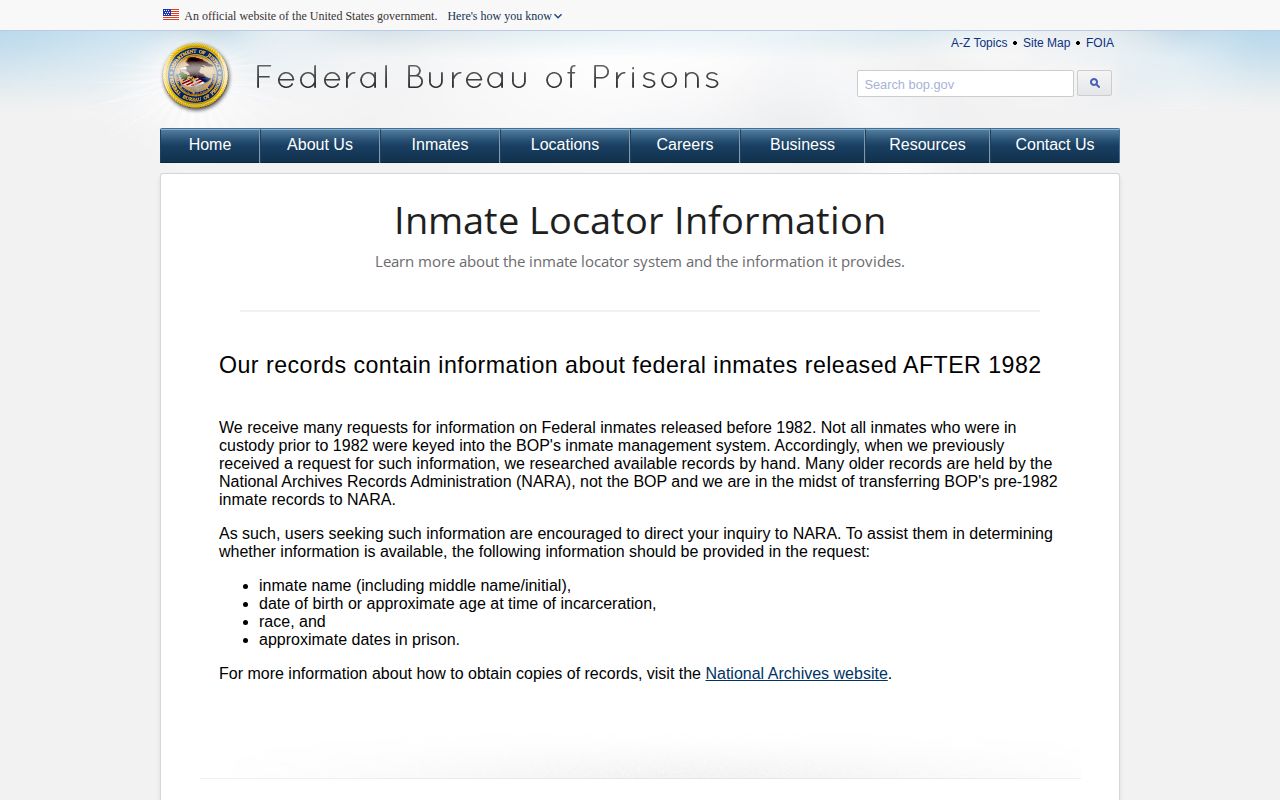
Federal projected release dates are separate. BOP says a future release date is a projected BOP date and may change. If a past release date appears with no facility, BOP says the person is no longer in BOP custody, though another system may still have custody or supervision. That federal rule should not be used to explain a Colorado CDOC or Park County Jail date.
The BOP record explanation shown below describes how federal release-date fields should be read.
Use BOP only for federal custody and keep it separate from Park County Jail and CDOC date calculations.